Start with a fragment.
The next chapter begins with notes, links, quotes and questions. Images and voice belong here too. No headline, polished argument or publishing date required.
Your AI agent builds it, you write. Built on the shoulder of giants, free, open source.
Open source. Publishing works today. Private capture, connections and long-term AI memory are the next chapter.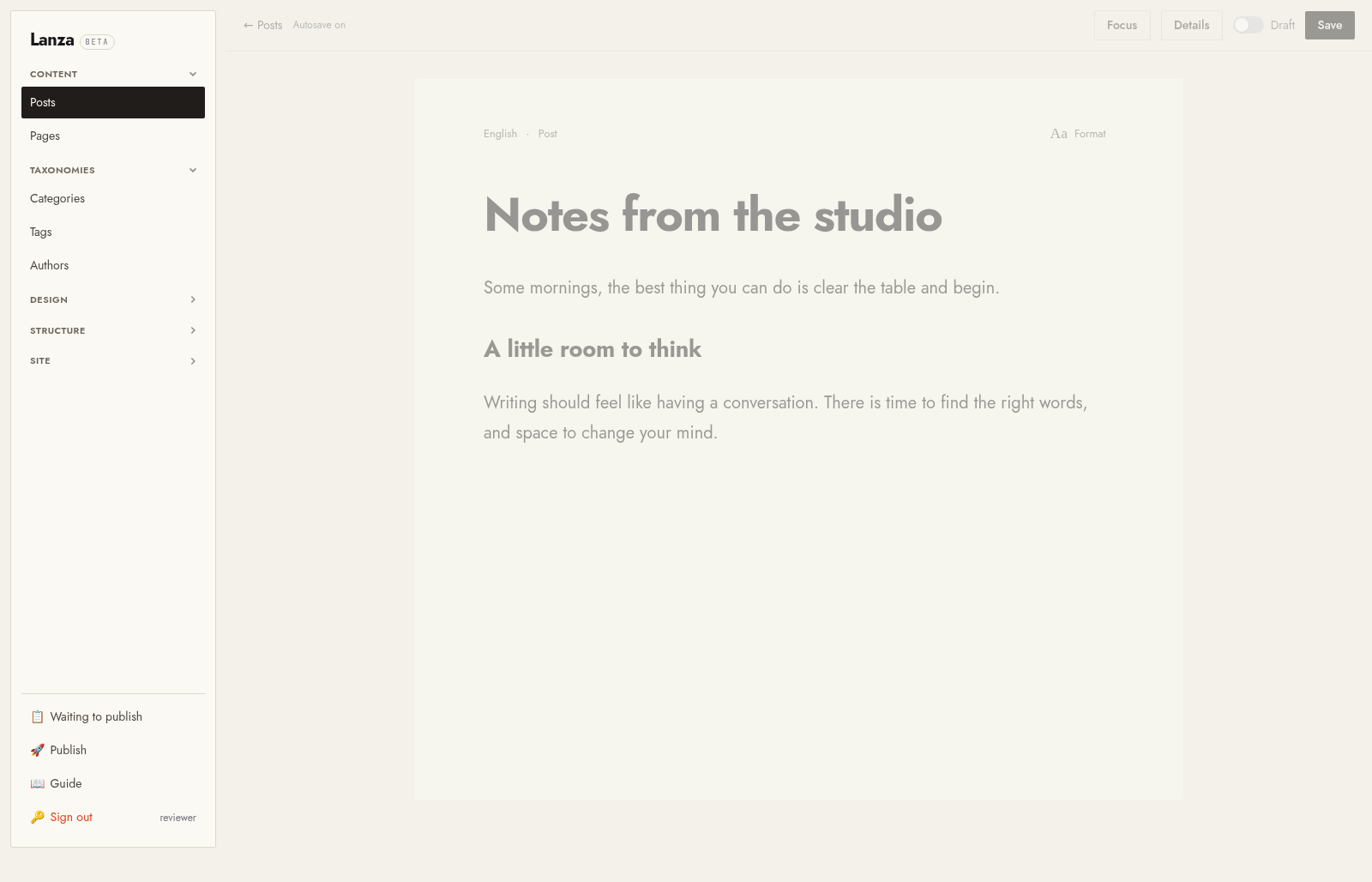
The actual editor, with sample content. Your words get the space.Take the guided tour ↗
Not every thought needs to become a post. We are building toward a private thinking space beneath the public website. These principles guide what comes next.
The next chapter begins with notes, links, quotes and questions. Images and voice belong here too. No headline, polished argument or publishing date required.
A thought from six months ago might be exactly what you need today. We want related ideas to find their way back to you, with the original context intact.
AI should ask a useful question, find a contradiction, or connect two observations. Your judgment remains the point of the work.
Original notes, sources and revisions matter. Our direction is explicit provenance: distinguish what you supplied from what AI suggested and what you chose to keep.
The publishing beta already separates saving from going live. The future notebook must go further: sharing an article must never expose the private thinking beneath it.
Your domain, portable files and a history you control. After ten years, the aim is a connected body of thought—not another feed you cannot take with you.
The thinking system grows from a working foundation: writing, editable pages, your own repository and deliberate publishing. Here is what you can use in the beta now.
Bring a brief, rough notes or a conversation. Your connected agent creates the structure, design and editable content fields.
Write a post. Refine a landing-page headline. Replace an image. Open Details for the URL, search appearance and publishing settings.
Check the staged changes and preview. Publish sends them to the live branch, where Cloudflare builds the updated site.
A better role for AI“Here is an argument I am developing. Ask me what is missing, point out contradictions, and help me edit. Keep your suggestions separate from my words.”
A better search description deserves more than a cramped input. Expand Details, work through the fields, then return to your writing. The document stays right where you left it.
Learn your way around ↗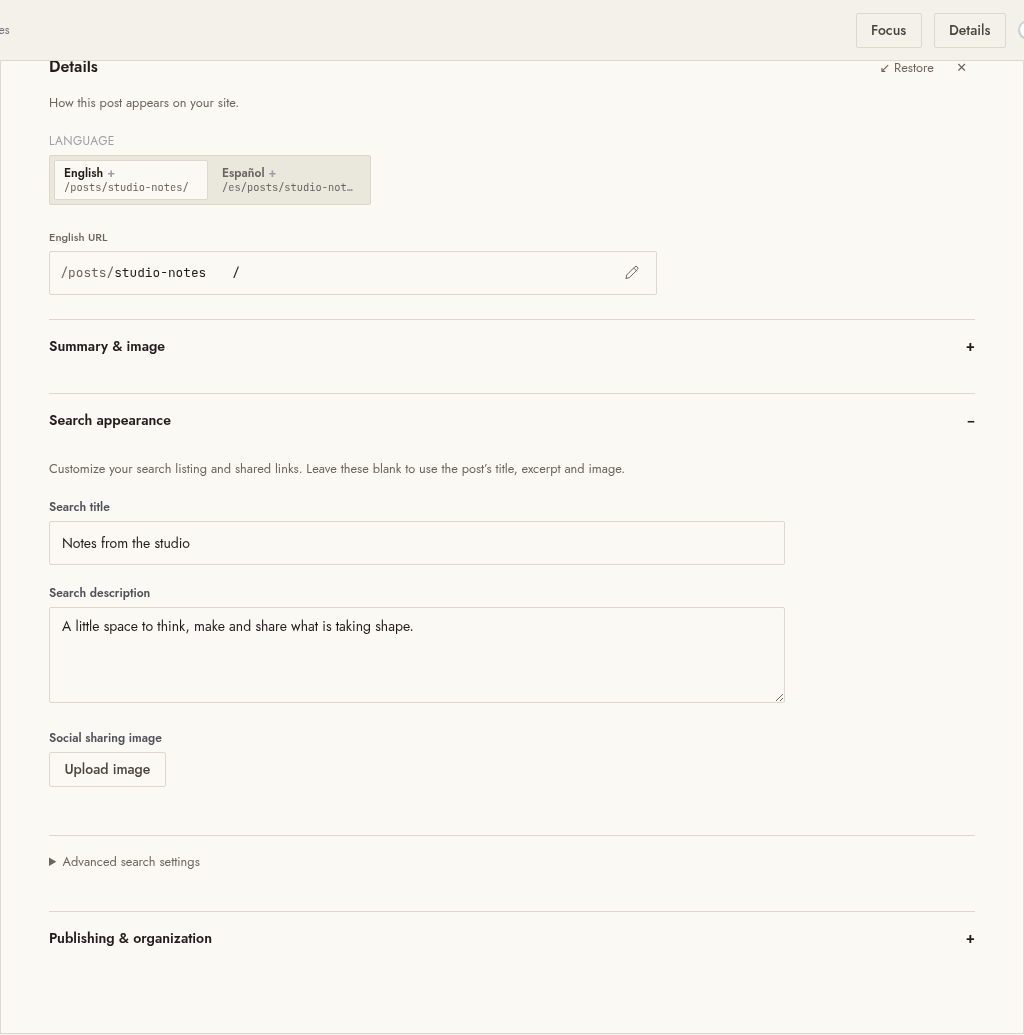
Cloudflare is the land. GitHub is the house and its history. Lanza helps you organize it and choose what to open to the world. The private thinking space needs its own boundary; an unpublished file in a public repository is not private.
Explore the source ↗Yes. The beta provides writing, page editing, multilingual content and reviewed publishing on your own website. Private thought capture, a connected notebook and automatic resurfacing are planned work, not features available today.
Not necessarily. Saving to staging keeps it off the published site, but anyone with repository access can read the file. A public repository makes those files public. The planned notebook needs a separate private storage boundary.
That is not the goal. AI should organize, challenge, find connections and help edit. You decide what you believe and what you want to say. Long-term memory and proactive connections are not yet implemented.
Research or training licensing is only a possible future direction, with separate, explicit consent for selected material. Publishing a piece must not become permission to license private notes. Connected AI services have their own data terms.
Your existing site content, templates and settings are files in your GitHub repository, with Git history. You control your domain and hosting accounts. Portable notebook files and provenance are requirements for the next chapter.
No. Save writes website changes to staging. Publish sends all staged website changes to the live branch. Review them before publishing.
That is the work we want technology to make room for.